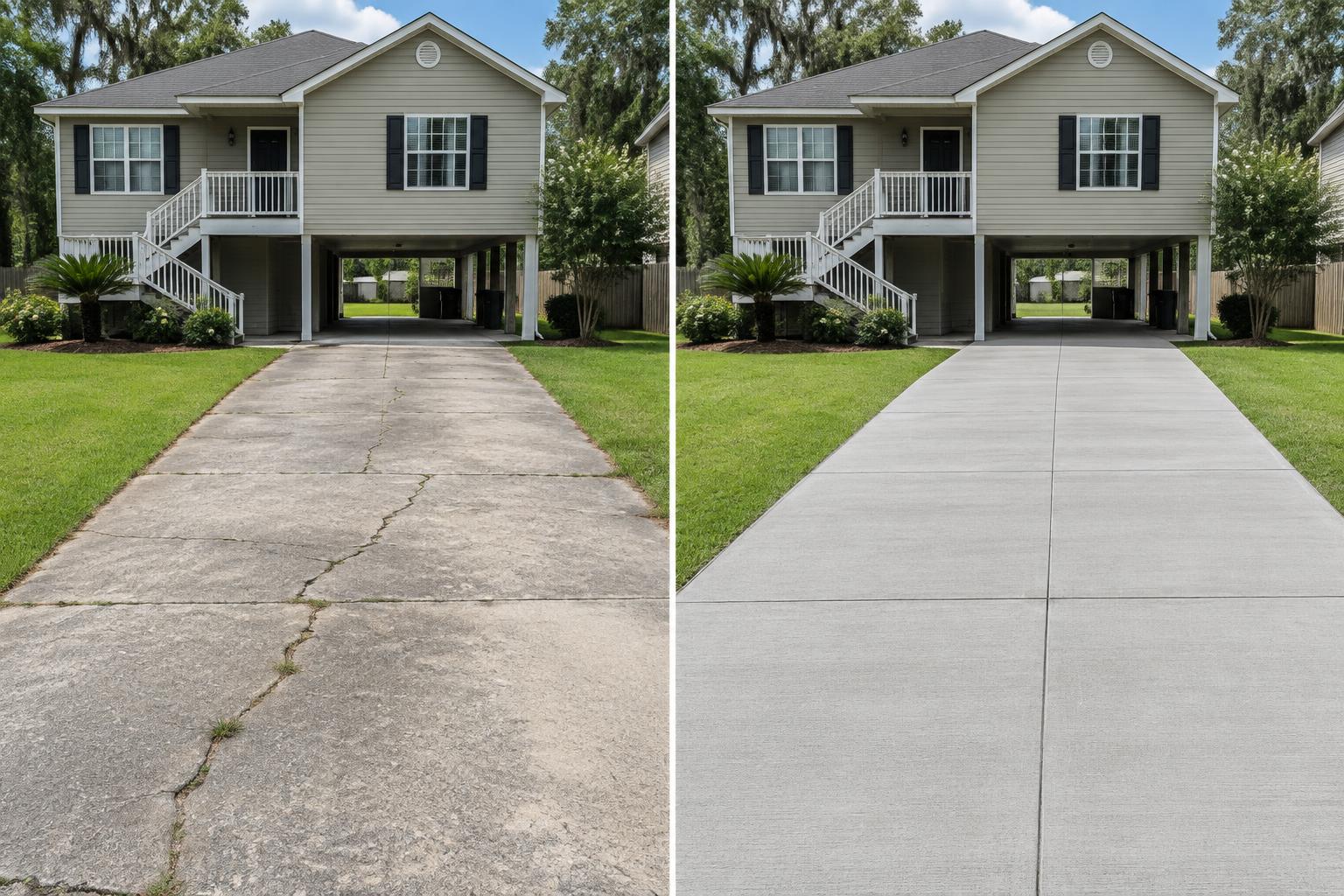
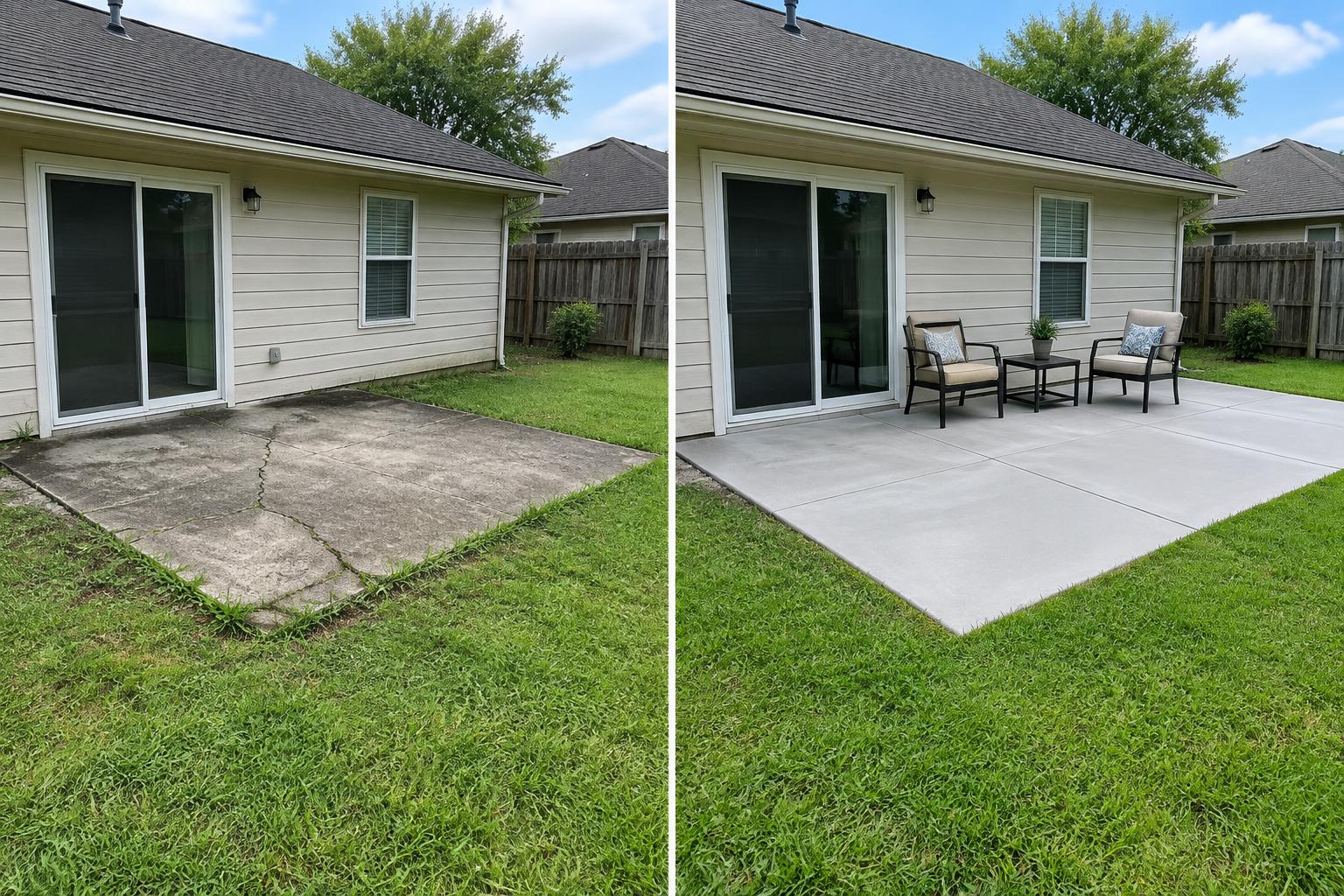
Northshore · Settlement & safety · 4 min read
Uneven concrete on the Northshore: leveling or replacement?
Leveling may be an option for some intact, settled slabs. Broken concrete, ongoing movement or unsuitable support can call for a different repair or replacement. The cause matters as much as the uneven edge.
By Gulf South Concrete · Homeowner guide
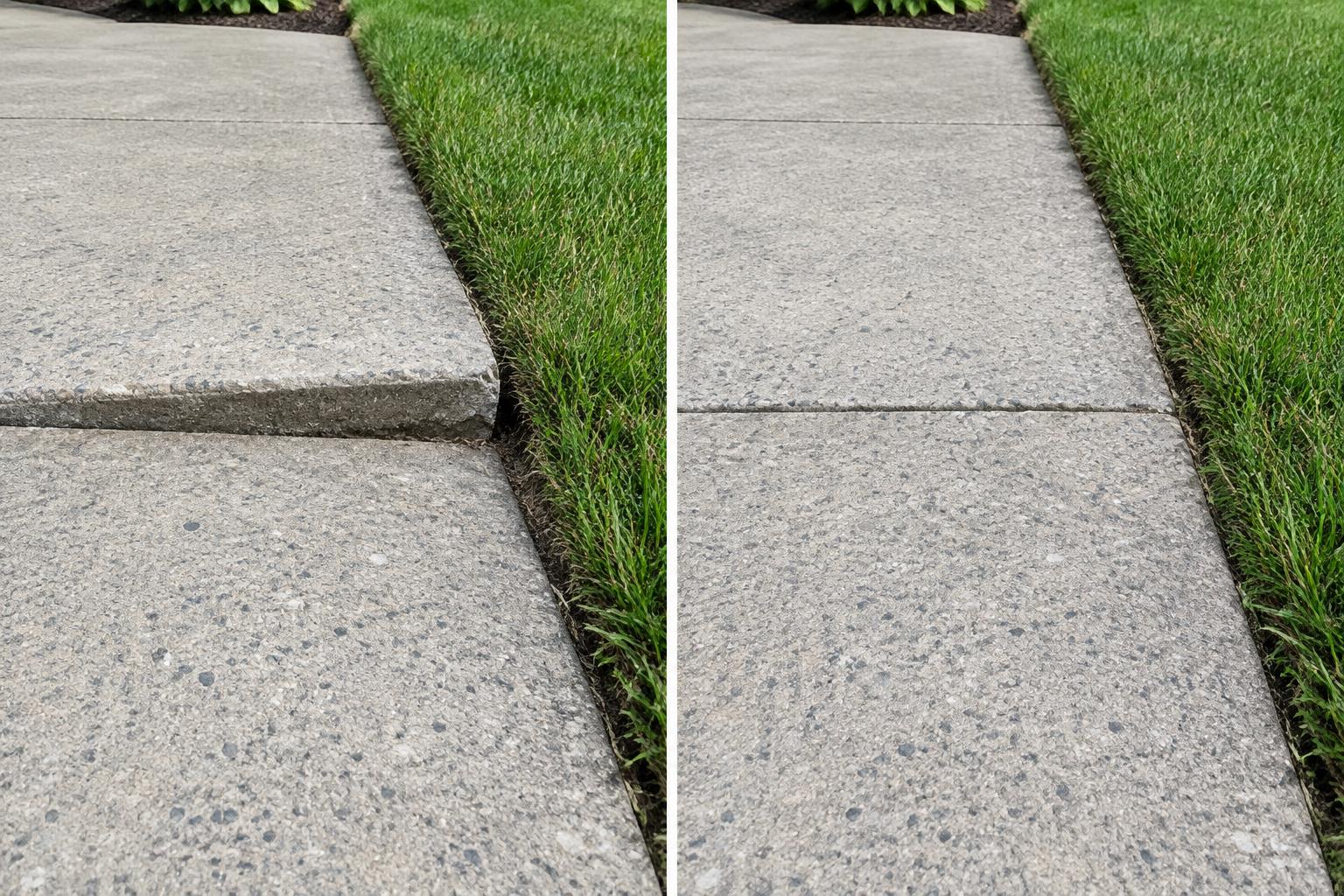
Treat the raised edge as a hazard first
An offset between walkway panels can catch a foot, stroller or wheel. Keep people away from the affected section where possible and use a safe alternate path. Do not grind, lift or excavate around concrete before understanding what the work involves.
For homes in Slidell, Mandeville, Covington and surrounding Northshore communities, photograph the entire route as well as the uneven joint. Include connections to steps, driveways and doors. These transitions can affect the available repair options.
Ask why the slab moved
Uneven concrete can have more than one cause. Changes in support, water movement, nearby roots or loading may be relevant, but those possibilities are not a diagnosis. Soil and site conditions vary from one property to another; a town name does not determine the repair method.
NRMCA emphasizes uniform, well-compacted support beneath slabs as part of controlling cracking. A site review should consider the condition of the concrete and what is happening around and underneath it, not just the visible height difference.
What leveling can—and cannot—do
Leveling aims to improve the position of an existing slab when its condition and support make that approach suitable. Ask what method is proposed, what preparation is needed, how joints will be handled and what maintenance or limitations apply.
Leveling is not the same as restoring broken concrete or repairing a house foundation. It may not resolve the reason for ongoing movement. A surface patch cannot, by itself, correct an unstable base.
When replacement deserves a closer look
Multiple broken panels, extensive deterioration or unsuitable elevations can make replacement worth considering. Removal allows the supporting area, drainage and new joint layout to be addressed as part of the scope.
If movement involves a structural house slab, or you notice related cracks in walls and floors, consult a qualified structural professional. Outdoor walkway work and structural foundation work require different assessments.
Document changes before requesting a quote
Take dated photos from the same angle and describe when you first noticed the problem. Note whether water collects nearby and whether the offset appears to be growing. Do not claim a specific cause unless it has been assessed.
A useful quote conversation compares the condition, likely scope and limitations of each option. Ask why repair, leveling or replacement is being recommended for your particular property.
What to include in your quote request
- Your Northshore town and project address
- Wide photos and close-ups of each uneven joint
- Approximate dimensions and access details
- When the movement started and whether it is changing
- Nearby water, roots, steps or door connections
Source & scope
NRMCA CIP 4 — Support conditions and settlement cracksGeneral homeowner information, not an engineering assessment. Site conditions and repair suitability require an on-site review.